Natural Bedding Guide
What to Know Before Choosing a Wool Mattress Topper
A wool mattress topper can bring a softer, more breathable feel to a bed without asking you to replace the mattress underneath. But wool products differ in thickness, quilting, fiber sourcing, and care. A little label-reading up front can help you understand what the topper will—and won’t—do for your sleep setup.
Maybe your mattress feels a touch too firm, or the bed seems warm and stuffy by the early hours of the morning. Perhaps you like the idea of natural bedding but want to make one considered change rather than overhaul the whole room. A wool mattress topper may be worth exploring: it adds a layer between the mattress and the sheet, and its feel depends on how much wool it contains and how that wool is held in place.
Wool is often valued in bedding for its ability to absorb and release moisture and for its springy, insulating character. Those qualities can make it an appealing choice for sleepers who want a less clammy-feeling surface or a gentle cushion. Still, “wool” is not a complete product description. The cover, fill, quilting, attachment design, and care instructions matter just as much as the fiber name on the label.
Before choosing a wool mattress topper, look past the natural-materials appeal and consider the practical details: what is actually inside, how thick the layer is, whether it fits your mattress, and how you’ll clean it. The aim is not to find a universally perfect topper. It is to identify one whose construction and upkeep make sense for your bed and everyday routine.
What a wool mattress topper is designed to do
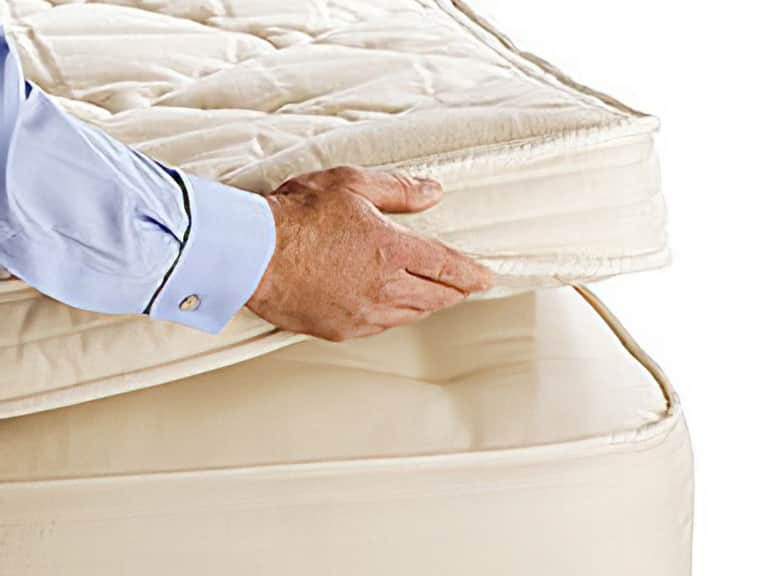
A topper is a separate comfort layer placed on top of a mattress. Depending on its design, it may add a little cushioning, alter the initial feel of the bed, or provide a buffer between the sleeper and the mattress surface. A wool-filled topper can offer a softly padded sensation, but it is not necessarily a thick, dramatic cloud of plushness. Many wool layers are relatively modest in loft, and their feel can be more springy or gently cushioned than deeply sinking.
It is also useful to distinguish a topper from a mattress pad or protector. A topper is generally chosen to change the bed’s comfort. A pad may be intended primarily to protect the mattress or provide a modest layer of softness, while a protector is designed to help shield it from spills, stains, or other wear. Products sometimes blur these categories, so read the construction and intended use rather than relying on the name alone.
Wool cannot repair a mattress that has a deep sag, broken support, or significant structural wear. A thin layer may change how the surface feels, but it cannot restore the underlying support system. If the mattress is uneven or nearing the end of its useful life, consider whether a topper is likely to address the problem you actually have.
Why wool is used in natural bedding
Wool fibers have a naturally crimped structure, which gives them resilience and helps create small pockets of air. In bedding, that structure can contribute to a lofted, cushioned surface. Wool also absorbs moisture vapor and releases it into the surrounding air, a feature that may help a sleep surface feel less damp. It does not mean a wool topper will keep every sleeper at an ideal temperature; comfort depends on the room, sheets, mattress, clothing, and individual preferences.
Its insulating character is another reason wool appears in bedding. Insulation is not simply synonymous with warmth: the experience depends on the product’s weight, thickness, cover, and how it is layered with the rest of the bed. Some sleepers appreciate wool’s balanced, breathable feel, while others may prefer a lighter cotton layer or a more contouring material.
Wool is an animal-derived fiber, so it is not suitable for everyone’s material preferences. People who avoid animal fibers for ethical, religious, or allergy-related reasons may want to consider cotton or other alternatives. If you have a known wool sensitivity, consult an appropriate healthcare professional and review the product details carefully before bringing it into your sleep environment.
Check the fill, cover, and construction
The word “wool” may describe the filling, the quilting, or only one component of a layered product. Start by checking the materials list for the full construction. Is the filling wool throughout, or is wool combined with cotton, latex, synthetic fibers, or another layer? What is the outer fabric made from? Are there additional batting, backing, elastic, or binding materials that affect the overall feel and care requirements?
Construction influences how evenly the fill stays distributed. Quilting or stitching can help keep wool in place, while the spacing and pattern of that stitching may affect the surface. A product with clearly described construction gives you a better idea of what you are buying than one that relies on broad claims such as “natural comfort” without specifying its components.
Look for details about the wool itself, too. The label may identify the type of fiber, country of origin, processing, or relevant certifications. These details can help clarify sourcing and standards, but no single phrase guarantees a particular feel or performance. If a claim matters to you, check whether it applies to the wool fill, the cover, or the finished topper—and whether the company explains what the claim means.
- Fill: Confirm whether the topper uses wool alone or a blend, and whether the quantity or weight is stated.
- Cover: Check the fiber content, weave, and whether the cover is removable or washable.
- Stitching: Look for a description of quilting or other methods used to hold the fill in place.
- Certifications: Verify which component is certified and what standard the certification addresses.
- Care: Read the cleaning instructions before purchase; wool inserts may require different care from their covers.
Clear specifications are especially helpful if you are comparing natural bedding products. A topper can include natural fibers while still containing other materials, and “natural” is not a substitute for a complete ingredient or materials list. The more transparent the description, the easier it is to decide whether the construction matches your priorities.
Match the thickness to the change you want
Thickness and fill weight have a major influence on how a topper feels. A thinner wool layer may make a subtle difference, bringing a little softness and a more finished feel to the surface. A loftier design can feel more cushioned, but it may also shift the way your body settles into the bed. Do not assume that thicker automatically means more comfortable or more supportive.
Think about what you are trying to improve. If you want a gentle buffer over a firm mattress, a lightly cushioned layer may be enough. If you want substantial contouring or a deeper, more enveloping sensation, wool may not feel like the material you have in mind. Comparing the stated thickness, fill amount, construction, and return terms can help set realistic expectations.
Consider your sleep position and the rest of your bedding, too. A side sleeper may be looking for additional surface cushioning at the shoulder and hip, while a back or stomach sleeper may prefer a flatter, more stable feel. These are individual comfort preferences, not medical prescriptions. A topper can alter surface sensation, but it should not be treated as a guaranteed solution for pain or a substitute for clinical advice.
Measure your mattress and check the fit
A topper that slides, bunches, or extends beyond the mattress can become a nightly annoyance. Confirm the mattress size—Twin, Queen, King, or another format—and compare it with the topper’s listed dimensions. Also check whether the design uses elastic straps, a fitted skirt, corner bands, or simply rests on the mattress under the sheet.
Measure mattress depth as well as length and width. A thick mattress, pillow-top surface, or additional mattress pad can affect how securely a fitted layer sits. If the topper has no attachment system, the fitted sheet may help hold it in place, but the result depends on sheet depth and the combined height of all the layers.
Do not forget the bed frame and headboard. Adding loft can make the finished bed feel taller, and a deep topper combined with a thick mattress may change how easily you get in and out. That small practical detail can matter as much as the material choice, particularly in a lower bed or a room with limited space around the frame.
Understand care before you commit
Wool can be durable in bedding, but a wool topper is not automatically machine washable. Some designs have a removable cover that can be laundered while the wool insert must be spot-cleaned or aired. Others may have specific professional-care recommendations. Follow the care label rather than applying generic advice for wool garments to a bulky bedding layer.
Ask how the product should be handled after a spill. A waterproof protector placed above the topper may help guard against everyday accidents, but it can also change the surface feel and airflow. Check that any protector is compatible with the mattress and topper, and consider how all layers work together. For routine freshness, airing the bed and washing sheets regularly may be more appropriate than washing the topper itself.
Some natural fillings can compress with use. The pace and extent depend on the amount of fill, quilting, how the bed is used, and how the topper is maintained. Read the warranty and care instructions for information about normal settling, expected wear, and what is excluded. Clear expectations help prevent a normal change in loft from being mistaken for a defect—or a real issue from being overlooked.
Wool compared with other mattress topper materials
There is no single best material for every sleeper. Wool, cotton, latex, and synthetic foams each create a different surface and come with different care and sourcing considerations. Comparing them by feel, construction, and maintenance is more useful than treating “natural” as a guarantee of superiority.
| Material | Common feel or feature | What to check |
|---|---|---|
| Wool | Springy, gently cushioned; often selected for moisture management and insulation. | Fill weight, quilting, fiber sourcing, and whether the insert can be washed. |
| Cotton | Familiar, breathable textile feel; fill may be relatively flat or softly padded. | Fiber content, weave, laundering instructions, and whether fill can shift. |
| Latex | Responsive, buoyant cushioning that tends to push back rather than slowly sink. | Latex type, thickness, cover materials, sourcing claims, and latex sensitivities. |
| Foam | Varies widely, from slow-contouring to more responsive designs. | Foam composition, certifications, heat feel, odor guidance, and return terms. |
These descriptions are broad; actual products can feel quite different depending on design. A wool layer is not necessarily cooler than every foam, and a natural fiber does not automatically provide the support or pressure relief a particular sleeper needs. If possible, compare detailed specifications and trial policies, and think about what you want to feel when you lie down—not only what materials you prefer in theory.
Read environmental and safety claims carefully
Many people consider a wool mattress topper because they want fewer synthetic materials or a more traceable bedding choice. That is a reasonable starting point, but broad claims deserve a closer look. Ask what the product contains, how the wool and cover were processed, and whether stated standards apply to the finished item or only to a particular component.
Certification names can be useful when they are clearly explained. Look up the standard directly and confirm what it covers: fiber production, textile processing, chemical restrictions, animal-welfare practices, or another aspect. A certification is not necessarily a blanket endorsement of every performance or health claim made about a product.
Keep safety language specific. Natural materials can still cause individual sensitivities, and a product’s composition may include more than its headline fiber. If you are choosing bedding for a child, follow the mattress and bedding manufacturer’s safety guidance for that age and sleep setting. In particular, do not add loose or extra bedding to an infant sleep space unless it is consistent with current safe-sleep guidance from qualified health authorities.
A practical checklist before buying
Before placing an order, take a moment to answer a few straightforward questions. They can help you separate a useful comfort layer from one that looks appealing in a product description but does not suit your home.
- What specific change do I want the topper to make to my bed’s feel?
- Is the filling wool, a wool blend, or a layered combination?
- What are the cover and backing made from?
- How thick is the topper, and is its fill amount or weight disclosed?
- Does the size match my mattress, including its depth and any existing layers?
- Will it stay in place with straps, a fitted skirt, or the fitted sheet?
- Can the cover be removed, and how must the wool itself be cleaned?
- What do certification, sourcing, and animal-welfare claims specifically cover?
- What is the return policy if the feel is not right for me?
- Does the warranty explain normal compression and expected maintenance?
The bottom line on wool bedding
A wool mattress topper may suit sleepers seeking a natural bedding layer with gentle cushioning and a breathable, moisture-managing character. The best match depends on the fill, cover, thickness, quilting, fit, and care routine—not just the presence of wool. Taking time to check these details can make the difference between a topper that integrates neatly into your bed and one that becomes difficult to maintain.
Start with the mattress you already own and the experience you want to change. Measure carefully, read the full materials list, and make sure the care instructions fit your household. If wool’s springy feel and maintenance needs seem right for you, a carefully specified topper can be a thoughtful addition. If you want a much deeper contour or need a washable layer, compare other mattress topper materials before deciding.
Frequently asked questions
Does a wool mattress topper make a bed softer?
It can add cushioning, but the change depends on fill weight, thickness, and construction. Wool usually provides a springy, gently padded feel rather than the deep, slow contouring associated with some foams. A topper also cannot correct a sagging or structurally worn mattress.
Can a wool topper help with temperature comfort?
Wool’s breathability and moisture-handling characteristics may help some sleepers find the surface more comfortable. Results vary with the topper’s design, bedding layers, room conditions, and personal preferences. No material can guarantee a particular temperature experience for everyone.
Can I wash a wool mattress topper at home?
Not necessarily. Care varies by construction, and many wool inserts are not intended for machine washing. Follow the manufacturer’s label; a removable cover may have separate laundering instructions from the fill.
Is every wool topper made entirely of wool?
No. A product may use wool only as fill or quilting and include cotton, synthetic fibers, or other materials elsewhere. Review the full materials list and check which parts any sourcing or certification claims apply to.